
Planning a wedding is exciting, but creating a realistic wedding timeline can quickly become overwhelming. There are vendors to coordinate, guests to welcome, photos to capture, meals to serve, and special moments to enjoy. A well-planned wedding timeline helps everything flow smoothly while giving you enough time to actually enjoy your celebration. The key is not to fill every minute of the day. Instead, create a timeline that gives each important part of your wedding enough breathing room. With thoughtful planning and support from your wedding venue, you can create a celebration that feels organized, relaxed, and memorable. If you are searching for a wedding venue near Dallas, Castle Waterford can help make the planning process easier by providing an elegant setting and spaces designed for different parts of your wedding celebration.
Why a Wedding Timeline Matters
A wedding timeline is more than a list of activities. It acts as a roadmap for your wedding day and helps everyone understand what needs to happen and when.officetimeline+1
A good timeline helps you:
- Keep vendors coordinated
- Give the wedding party clear expectations
- Reduce unnecessary waiting time
- Allow enough time for photographs
- Keep the ceremony and reception organized
- Coordinate meals and entertainment
- Create a better experience for guests
- Give yourself time to enjoy the celebration
Without a timeline, even small delays can affect the rest of the day. A realistic schedule gives your planner, vendors, wedding party, and venue team a clear structure to follow. For more guidance on planning without stress, see How to Plan a Stress-Free Wedding Reception.
Start With Your Ceremony Time
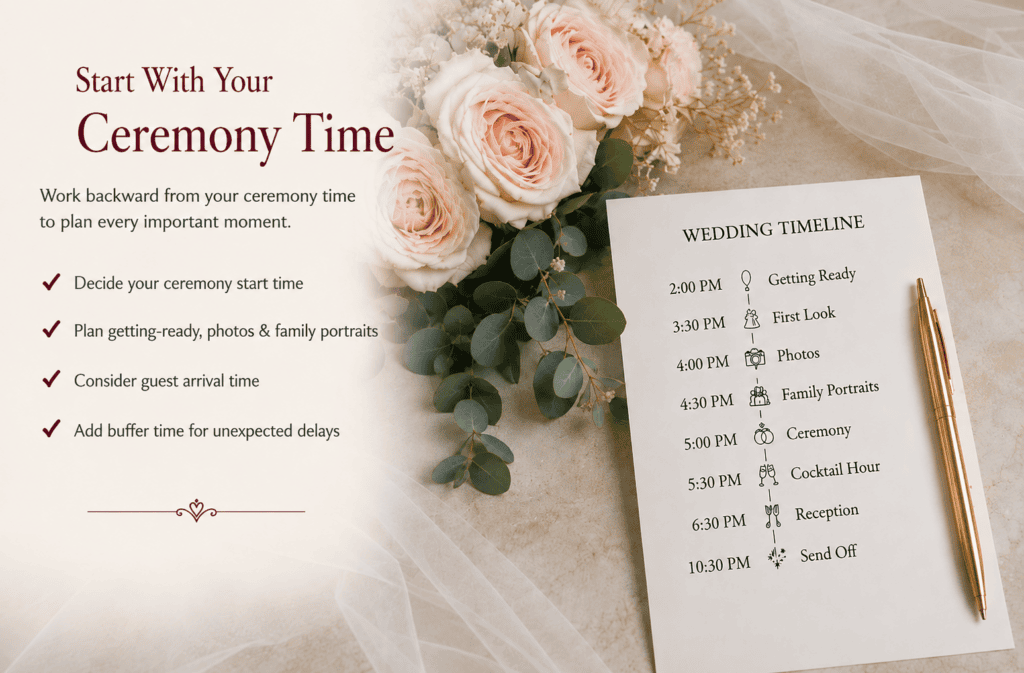
One of the easiest ways to build your wedding timeline is to work backward.officetimeline Start by deciding when you want the ceremony to begin. Then determine how much time you need before the ceremony for getting ready, photographs, family portraits, and guest arrival. For example, if your ceremony begins at 5:00 p.m., your wedding party should be ready well before the ceremony. This gives your photographer enough time to capture important moments without making everyone feel rushed. Your timeline should also include extra time for unexpected delays. Hair and makeup may take longer than expected, guests may arrive late, or transportation may take additional time. Building small buffers into your schedule can make your wedding day feel much less stressful. To explore timing ideas for different ceremony starts, check out How to Plan a Perfect Multi-Day Celebration for Your Wedding Day.
Create a Getting-Ready Schedule
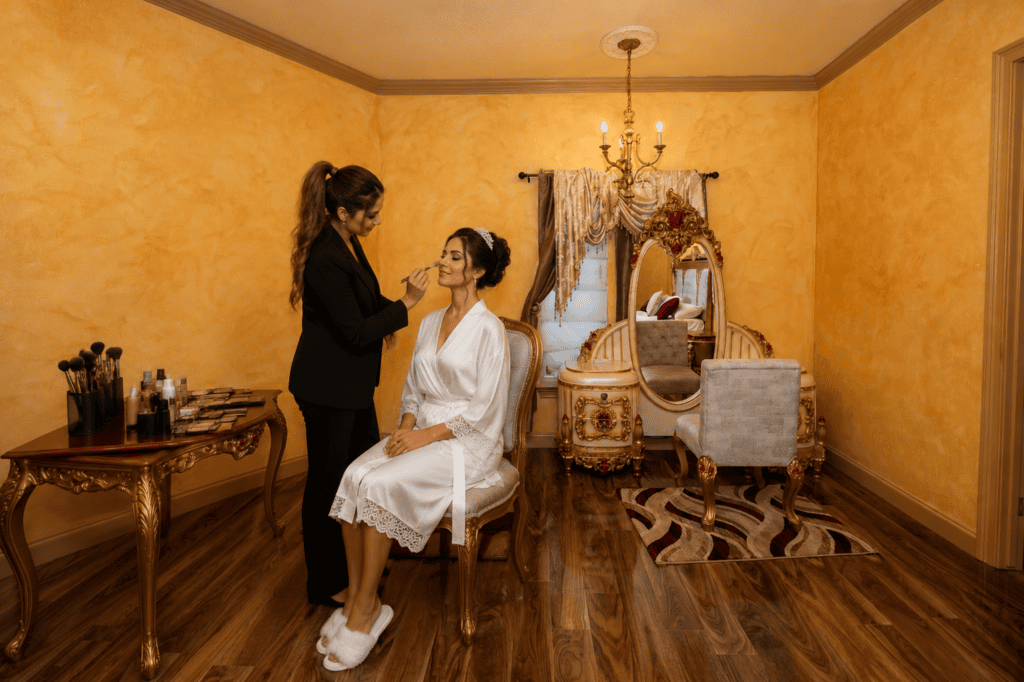
The wedding day often begins long before guests arrive. Creating a separate getting-ready schedule for the couple and wedding party can make the morning much easier to manage.
Include time for:
- Hair and makeup
- Getting dressed
- Detail photographs
- Individual portraits
- First-look photographs
- Wedding party photographs
- Family photographs
- Travel or transition time
If you are getting ready at the venue, choosing a location with dedicated suites can make this part of the day easier. Castle Waterford offers Royal Suites and a Bridal Suite, giving couples dedicated spaces to prepare before the celebration begins. Having preparation spaces at the venue can reduce unnecessary travel and help keep the wedding schedule organized. For ideas on making this time even more special, read How a Beautiful Suite Stay Can Elevate Your Wedding Experience.
Allow Enough Time for Wedding Photography
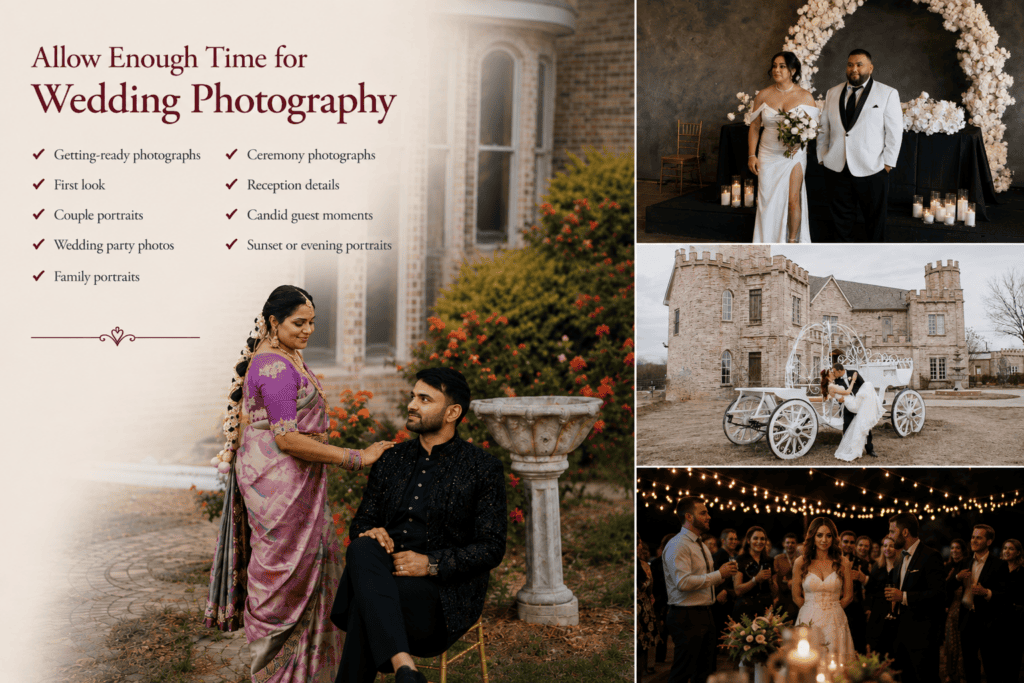
Photography is one of the most important parts of a wedding timeline because many of the day’s memories will be preserved through photographs and video. Discuss your photography schedule with your photographer before creating the final timeline.blissandbone+1
Make time for:
- Getting-ready photographs
- First look
- Couple portraits
- Wedding party photos
- Family portraits
- Ceremony photographs
- Reception details
- Candid guest moments
- Sunset or evening portraits
Avoid scheduling photographs too tightly. Giving your photographer enough time can result in more relaxed and natural images. A venue with multiple scenic locations can also make photography easier because you may not need to travel between locations. At Castle Waterford, couples have access to distinctive settings that can provide a variety of photo opportunities, including the heart-shaped pond, Enchanted Forest Trail, castle-inspired architecture, ballroom, and elegant suites. For inspiration, see Picture-Perfect Spots at Castle Waterford for Wedding Photography.
Plan Your Guest Arrival
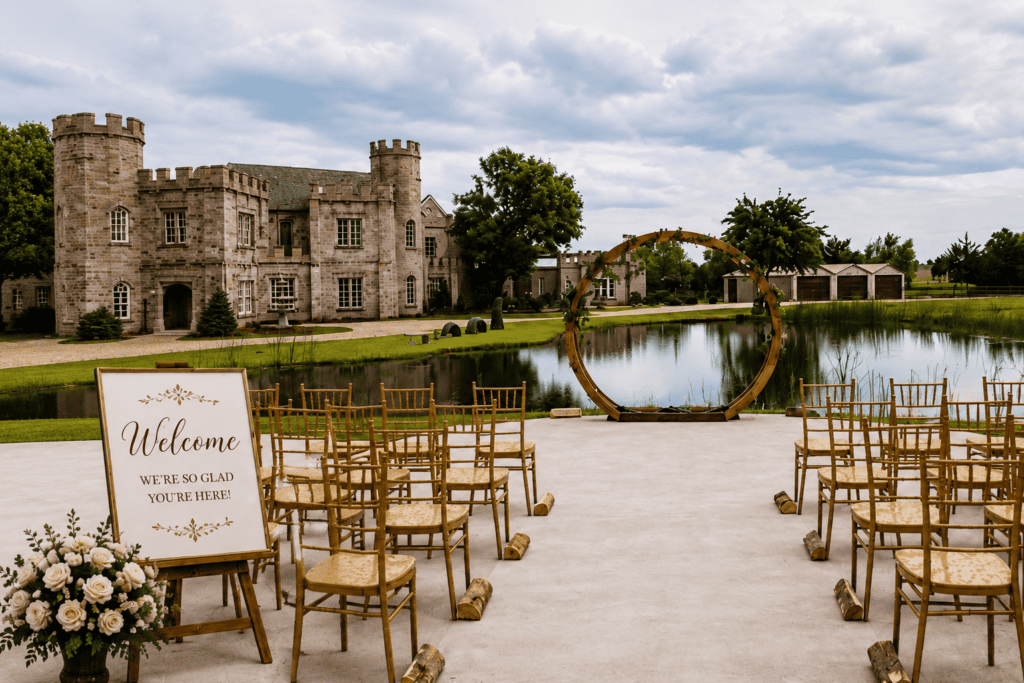
Your guests should know where to go and what to expect when they arrive.
Your timeline should consider:
- Guest arrival
- Parking and entry
- Welcome area
- Seating
- Ceremony start
- Cocktail hour
- Reception transition
Clear signage and an organized arrival process can make guests feel comfortable from the beginning. If your ceremony and reception are hosted at the same venue, the transition can be simpler for both guests and vendors. This can help eliminate unnecessary travel and keep the day moving smoothly. For more guest-focused ideas, explore Family-Friendly Event Planning Tips for Large Gatherings.
Build a Realistic Ceremony Timeline
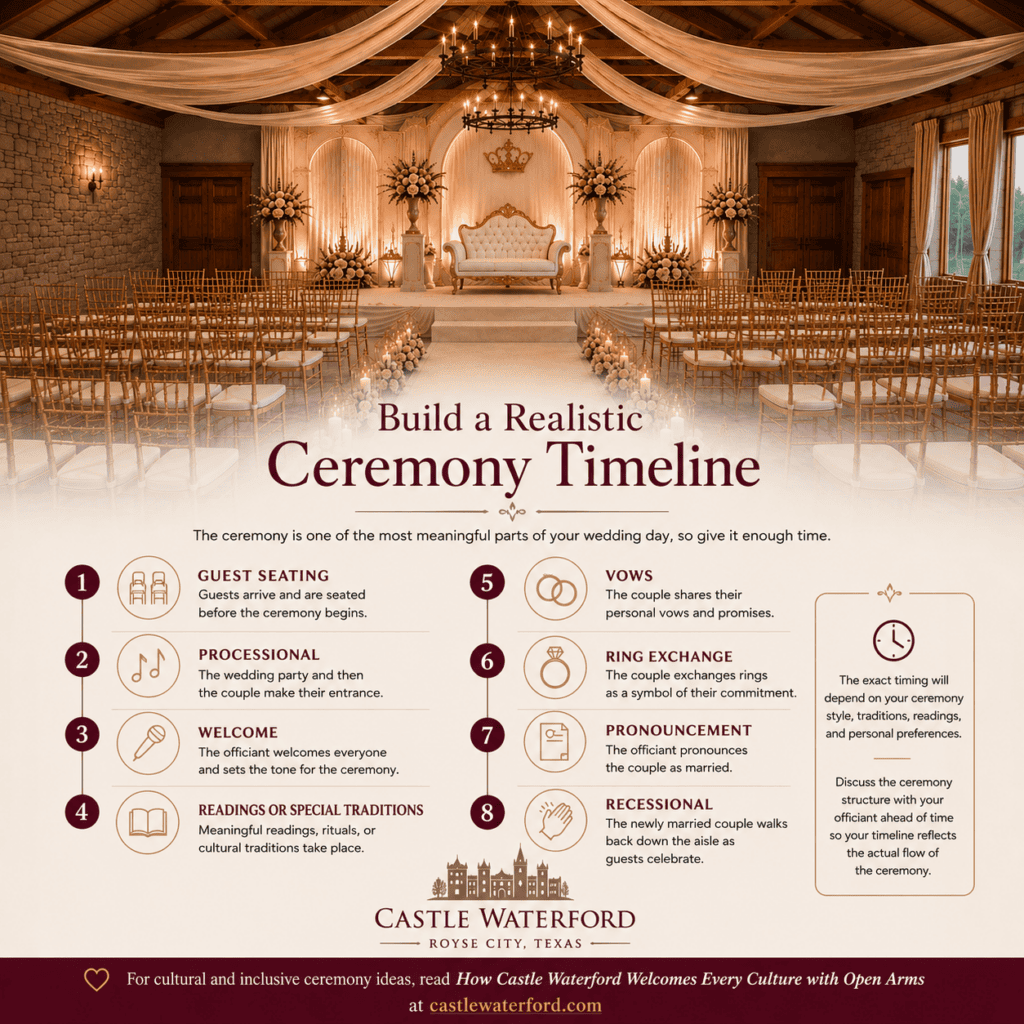
The ceremony is one of the most meaningful parts of your wedding day, so give it enough time.
A basic ceremony timeline may include:
- Guest seating
- Processional
- Welcome
- Readings or special traditions
- Vows
- Ring exchange
- Pronouncement
- Recessional
The exact timing will depend on your ceremony style, traditions, readings, and personal preferences. Discuss the ceremony structure with your officiant ahead of time so your timeline reflects the actual flow of the ceremony. For cultural and inclusive ceremony ideas, read How Castle Waterford Welcomes Every Culture with Open Arms.
Don’t Forget Cocktail Hour

Cocktail hour creates a natural transition between the ceremony and reception. It gives guests an opportunity to:
- Enjoy drinks and appetizers
- Socialize
- Explore the venue
- Take photographs
- Prepare for the reception
For the couple, cocktail hour can also provide time to complete family or couple portraits. If your wedding venue offers attractive spaces for guests to gather, cocktail hour becomes an enjoyable part of the celebration rather than simply a waiting period.
Schedule the Reception Carefully
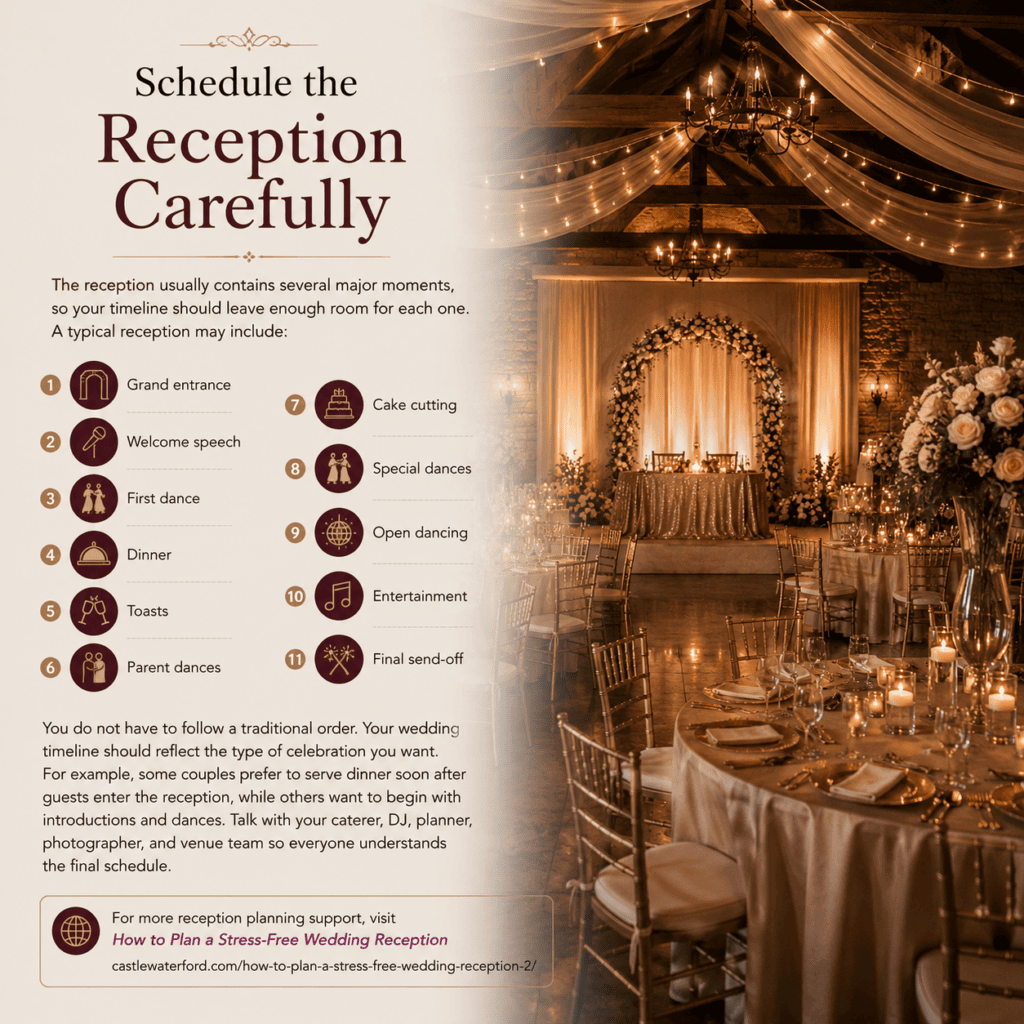
The reception usually contains several major moments, so your timeline should leave enough room for each one.
A typical reception may include:
- Grand entrance
- Welcome speech
- First dance
- Dinner
- Toasts
- Parent dances
- Cake cutting
- Special dances
- Open dancing
- Entertainment
- Final send-off
You do not have to follow a traditional order. Your wedding timeline should reflect the type of celebration you want. For example, some couples prefer to serve dinner soon after guests enter the reception, while others want to begin with introductions and dances. Talk with your caterer, DJ, planner, photographer, and venue team so everyone understands the final schedule. For more reception planning support, visit How to Plan a Stress-Free Wedding Reception.
Add Buffer Time Throughout the Day
One of the biggest wedding planning mistakes is creating a timeline that is too tight. If every activity is scheduled back-to-back, one small delay can affect the entire day.blissandbone+1
Instead, add small buffers between important activities.
For example:
Instead of:
- 5:00 p.m. – Ceremony
- 5:30 p.m. – Photos
- 6:00 p.m. – Reception
Allow additional transition time so guests, vendors, and the wedding party do not feel rushed. Buffer time can also give you unexpected moments to take a breath and enjoy your wedding day.
Consider Your Vendors When Building the Timeline
Your wedding timeline should not focus only on the ceremony and reception. Every vendor may have specific timing requirements. Your photographer may need additional time for portraits. Your DJ may need time to set up equipment. Your caterer may need a specific schedule for meal service. Your decorator may need access to the venue before guests arrive. Create one master timeline and share it with everyone involved. This prevents confusion and helps vendors coordinate their responsibilities. For a detailed checklist, see Checklist: What to Bring on the Day of Your Wedding.
How Castle Waterford Can Help With Your Wedding Timeline
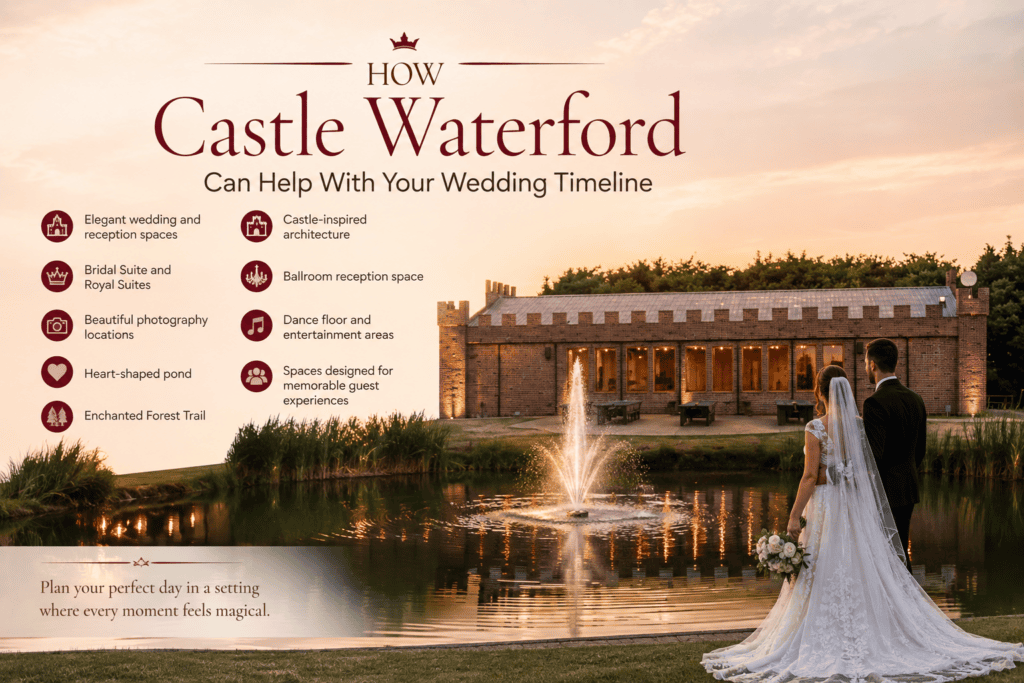
Choosing the right venue can make wedding-day logistics easier. Castle Waterford, located in Royse City, Texas, offers a distinctive castle-inspired wedding setting near the Dallas area with spaces and features that can support different parts of your celebration. Instead of moving between multiple locations for every part of your wedding day, couples can plan important moments within the venue environment.
Castle Waterford can support your wedding experience with features such as:
- Elegant wedding and reception spaces
- Bridal Suite and Royal Suites
- Beautiful photography locations
- Heart-shaped pond
- Enchanted Forest Trail
- Castle-inspired architecture
- Ballroom reception space
- Dance floor and entertainment areas
- Spaces designed for memorable guest experiences
Having these elements within one venue can make your wedding timeline easier to coordinate and reduce unnecessary travel between locations. Couples can also explore Castle Waterford’s wedding packages to understand the available venue options and plan their celebration around the spaces and services they need.
Sample Stress-Free Wedding Timeline
Here is an example of how a wedding day could be structured:
- 12:00 p.m. – Getting Ready
Couple and wedding party begin preparations. - 2:00 p.m. – Detail & Getting-Ready Photos
Photographer captures wedding details and preparation moments. - 3:00 p.m. – First Look & Couple Photos
The couple has private time together followed by portraits. - 3:45 p.m. – Wedding Party & Family Photos
Complete group photographs before the ceremony. - 4:30 p.m. – Guest Arrival
Guests arrive and take their seats. - 5:00 p.m. – Wedding Ceremony
The ceremony begins. - 5:30 p.m. – Cocktail Hour
Guests enjoy refreshments while the couple completes remaining photographs. - 6:30 p.m. – Reception Begins
Grand entrance, welcome, and first dance. - 7:00 p.m. – Dinner
Guests enjoy the reception meal. - 7:45 p.m. – Toasts & Special Dances
Family speeches, dances, and other special moments. - 8:15 p.m. – Open Dancing & Entertainment
Guests enjoy music and celebration. - 9:30 p.m. – Cake Cutting
A special moment for the couple and guests. - 10:00 p.m. – Final Celebration & Send-Off
The evening comes to a memorable close.
Your actual schedule may look different depending on your ceremony time, guest count, vendors, traditions, and reception plans. The goal is to create a timeline that works for your wedding not to copy someone else’s schedule exactly. For more timeline examples, see How to Plan a Perfect Multi-Day Celebration for Your Wedding Day.
Tips for Keeping Your Wedding Timeline Stress-Free
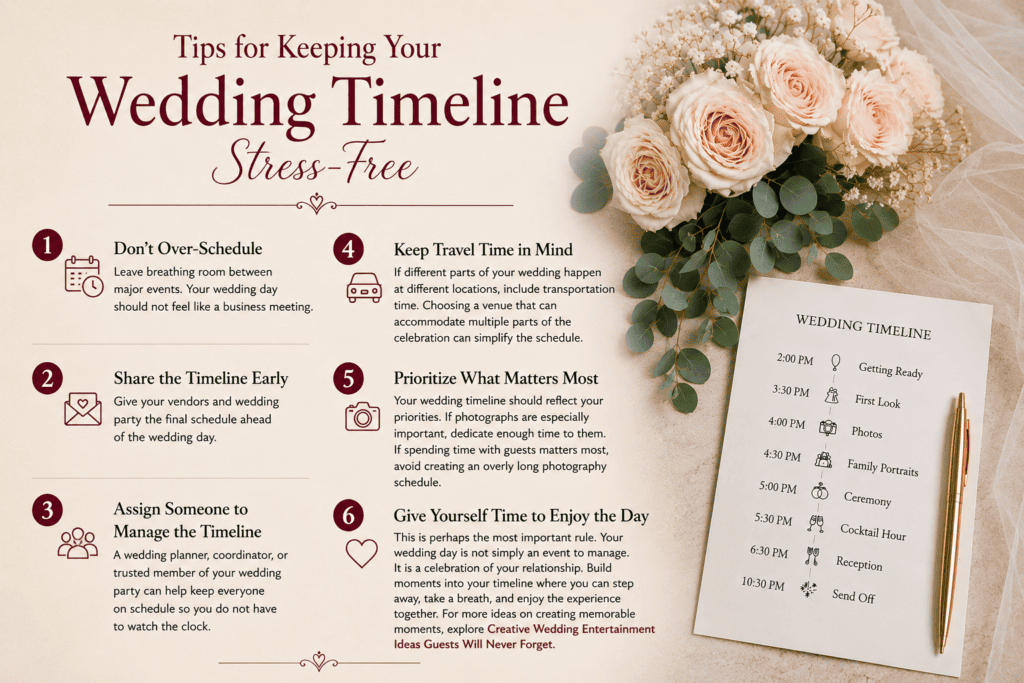
1. Don’t Over-Schedule
Leave breathing room between major events. Your wedding day should not feel like a business meeting.
2. Share the Timeline Early
Give your vendors and wedding party the final schedule ahead of the wedding day.
3. Assign Someone to Manage the Timeline
A wedding planner, coordinator, or trusted member of your wedding party can help keep everyone on schedule so you do not have to watch the clock.
4. Keep Travel Time in Mind
If different parts of your wedding happen at different locations, include transportation time. Choosing a venue that can accommodate multiple parts of the celebration can simplify the schedule.
5. Prioritize What Matters Most
Your wedding timeline should reflect your priorities. If photographs are especially important, dedicate enough time to them. If spending time with guests matters most, avoid creating an overly long photography schedule.
6. Give Yourself Time to Enjoy the Day
This is perhaps the most important rule. Your wedding day is not simply an event to manage. It is a celebration of your relationship. Build moments into your timeline where you can step away, take a breath, and enjoy the experience together. For more ideas on creating memorable moments, explore Creative Wedding Entertainment Ideas Guests Will Never Forget.
Final Wedding Timeline Checklist
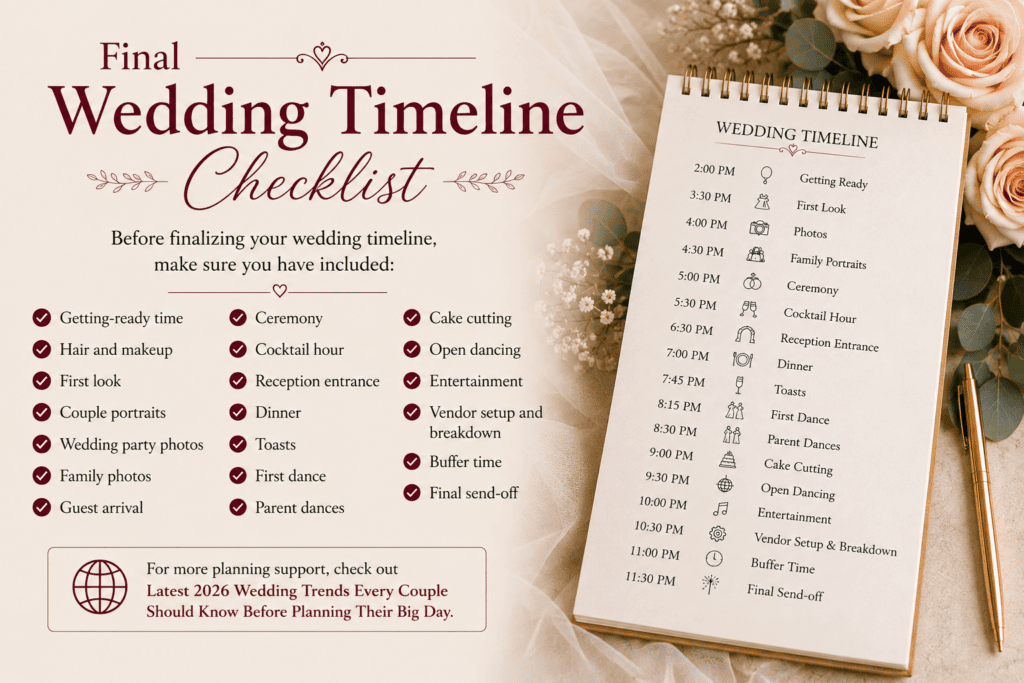
Before finalizing your wedding timeline, make sure you have included:
- Getting-ready time
- Hair and makeup
- First look
- Couple portraits
- Wedding party photos
- Family photos
- Guest arrival
- Ceremony
- Cocktail hour
- Reception entrance
- Dinner
- Toasts
- First dance
- Parent dances
- Cake cutting
- Open dancing
- Entertainment
- Vendor setup and breakdown
- Buffer time
- Final send-off
For more planning support, check out Latest 2026 Wedding Trends Every Couple Should Know Before Planning Their Big Day.
More Event Ideas at Castle Waterford
Castle Waterford isn’t just for weddings. The same elegant spaces work beautifully for many types of celebrations:
- Gatherings & Reunions: Gatherings
- Holiday & Seasonal Parties: Holidays & Parties
- Corporate & Business Events: Business Meetings
- Anniversary Celebrations: Anniversary Parties
- Birthday Parties: Birthday
- Quinceañeras: Quinceañera
For more inspiration, browse recent posts such as:
Conclusion

Creating the perfect wedding timeline does not mean planning every second of your day. It means creating enough structure to keep important moments organized while leaving room for real experiences, unexpected moments, and time with the people you love. Start with your ceremony time, work backward, coordinate with your vendors, allow buffer time, and prioritize the moments that matter most to you. Most importantly, choose a wedding venue that can make your schedule easier to manage. For couples searching for a luxury wedding venue near Dallas, Castle Waterford offers a distinctive setting where elegant spaces, scenic surroundings, and memorable wedding experiences come together. With features such as the heart-shaped pond, Enchanted Forest Trail, Royal Suites, Bridal Suite, and ballroom, Castle Waterford can help couples create a wedding day that feels organized, beautiful, and unforgettable. A thoughtful timeline gives you the freedom to stop worrying about what happens next and start enjoying the moment you have been waiting for.
Frequently Asked Questions
1. How far in advance should you create a wedding timeline?
It is best to start creating your wedding timeline several weeks before the wedding and finalize it after confirming details with your vendors. Share the final version with everyone who needs it before the wedding day. For a broader planning view, see Your Complete Wedding Timeline: 12-Month Planning Guide.
2. How much time should you allow between the ceremony and reception?
The ideal amount of time depends on your venue layout and photography schedule. A short transition can work well when the ceremony and reception take place at the same venue. Always include enough time for photographs and guest movement.
3. Should couples include buffer time in a wedding timeline?
Yes. Buffer time is one of the best ways to prevent stress. Hair and makeup, photographs, guest arrivals, transportation, and other activities can take longer than expected.
4. Can one venue host different parts of a wedding day?
Yes. Many wedding venues are designed to accommodate multiple parts of the celebration, including getting ready, the ceremony, photographs, cocktail hour, and reception. A venue with dedicated spaces can help reduce travel and simplify the timeline.
5. How can Castle Waterford help couples plan a stress-free wedding?
Castle Waterford provides an elegant castle-inspired setting in Royse City, Texas, along with spaces and features that can support different parts of a wedding celebration. With dedicated suites, event spaces, scenic photography locations, and reception areas, couples can plan a cohesive wedding experience while reducing unnecessary movement between locations. Explore wedding packages to see how the venue can fit your timeline and vision.